The trading environment presented by TibiPro appears structured from a functional and security-oriented standpoint rather than a surface-level feature perspective.
Platform architecture often signals its intended user base, since structural organization tends to reveal whether a system is designed for simplicity or for layered operational capability. In this case, the layout suggests an emphasis on logical arrangement, controlled accessibility, and stability-focused interaction, all of which are commonly associated with platforms built for sustained rather than casual use.
This TibiPro.com Review evaluates how that structural design translates into real workflow conditions. The interface appears organized around execution clarity, portfolio visibility, and centralized analytical access, allowing users to navigate key functions without shifting across disconnected modules.
Monitoring tools, order placement panels, and account metrics operate within a unified workspace, which may help reduce navigation delays and maintain situational awareness during active sessions.
Structural clarity becomes particularly relevant during volatile market conditions, when interface friction can interfere with execution timing and decision accuracy. A consolidated layout can reduce cognitive load, enabling traders to interpret information more efficiently while maintaining control over trade management.
Such an organization suggests a design philosophy centered on operational discipline and workflow continuity rather than decorative complexity or feature saturation.

How Are Core Trading Features Integrated Into the Workflow?
This TibiPro.com Review examines how execution tools and market access features are embedded within the daily trading environment. Effective platforms integrate analytics and order deployment within a single operational framework.
Execution Tools
Order tickets incorporate leverage configuration, stop-loss and take-profit settings, and real-time pricing visibility within the primary trading interface. This integration reduces the need for separate adjustment panels and streamlines trade deployment.
Analytical Overlays
Charting tools appear layered directly into the dashboard environment. Analytical indicators, trend visualization tools, and macro data access are positioned alongside execution controls rather than isolated in separate modules.
The integration of these elements suggests that execution and analysis are intended to operate simultaneously rather than sequentially.
How Does the Infrastructure Support Platform Stability?
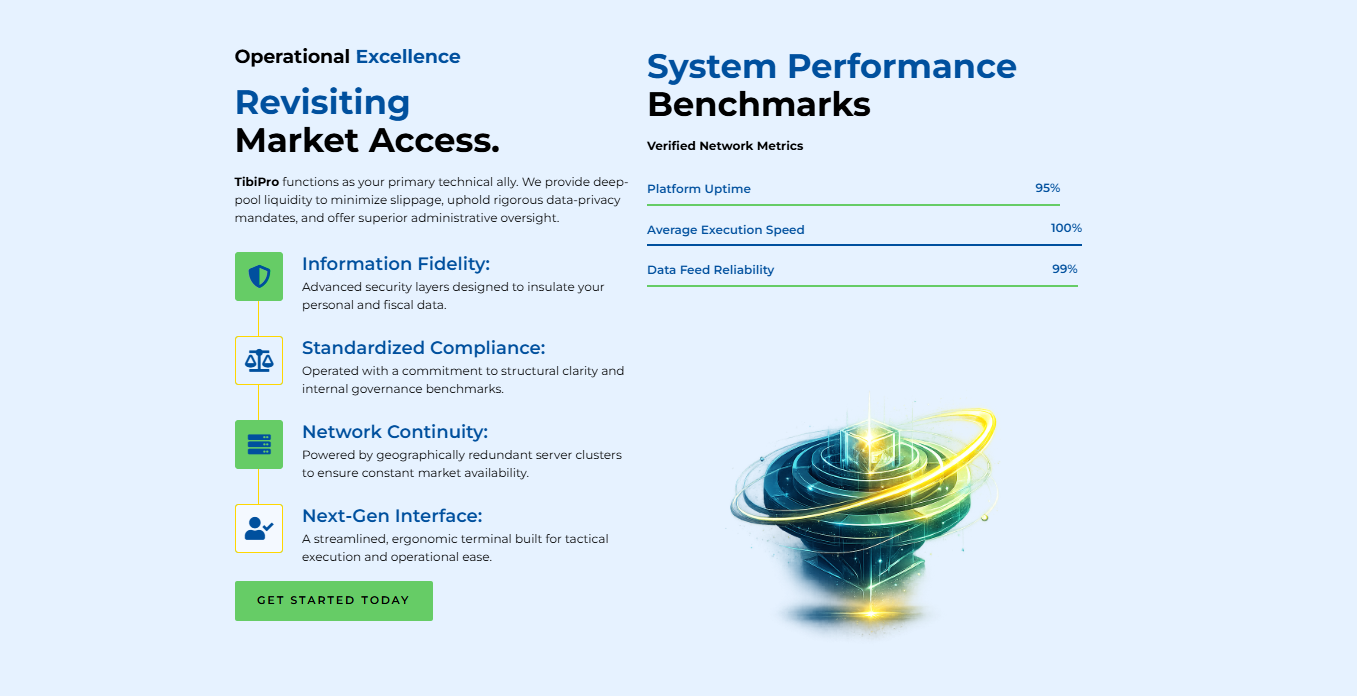
This TibiPro.com Review analyzes whether the backend infrastructure aligns with performance consistency expectations. Platform reliability is often defined by uptime continuity, feed synchronization, and server redundancy.
References to redundant hosting frameworks indicate an emphasis on minimizing downtime exposure. During high-impact economic releases, infrastructure resilience plays a central role in maintaining order continuity.
Data Transmission and Encryption
Encrypted communication channels are referenced to secure transaction flow and protect account data integrity. Security measures embedded within the infrastructure contribute to maintaining operational trust without interfering with speed.
Latency Considerations
Execution timing can be affected by routing efficiency and data alignment. Systems designed for structured trading typically prioritize synchronized feeds to reduce slippage during rapid price fluctuations.
Stability and encryption working together suggest that protection and performance are positioned as complementary rather than competing priorities.
What Security Mechanisms Reinforce Capital Protection?
This TibiPro.com Review evaluates how capital protection and data security are integrated into the platform’s architecture. Segregated account structures are referenced as part of the system framework, separating operational capital from user balances.
Continuous monitoring mechanisms are described to detect irregular activity patterns. Such monitoring supports proactive risk detection rather than reactive problem resolution.
Multi-Layer Safeguards
Security models appear to combine encrypted access protocols with controlled authorization layers. Multi-step verification processes may be incorporated to prevent unauthorized access attempts.
Security integration within the primary infrastructure, rather than as an external add-on, suggests a system designed to embed safeguards into its operational core.
How Is Market Access Structured Across Asset Categories?
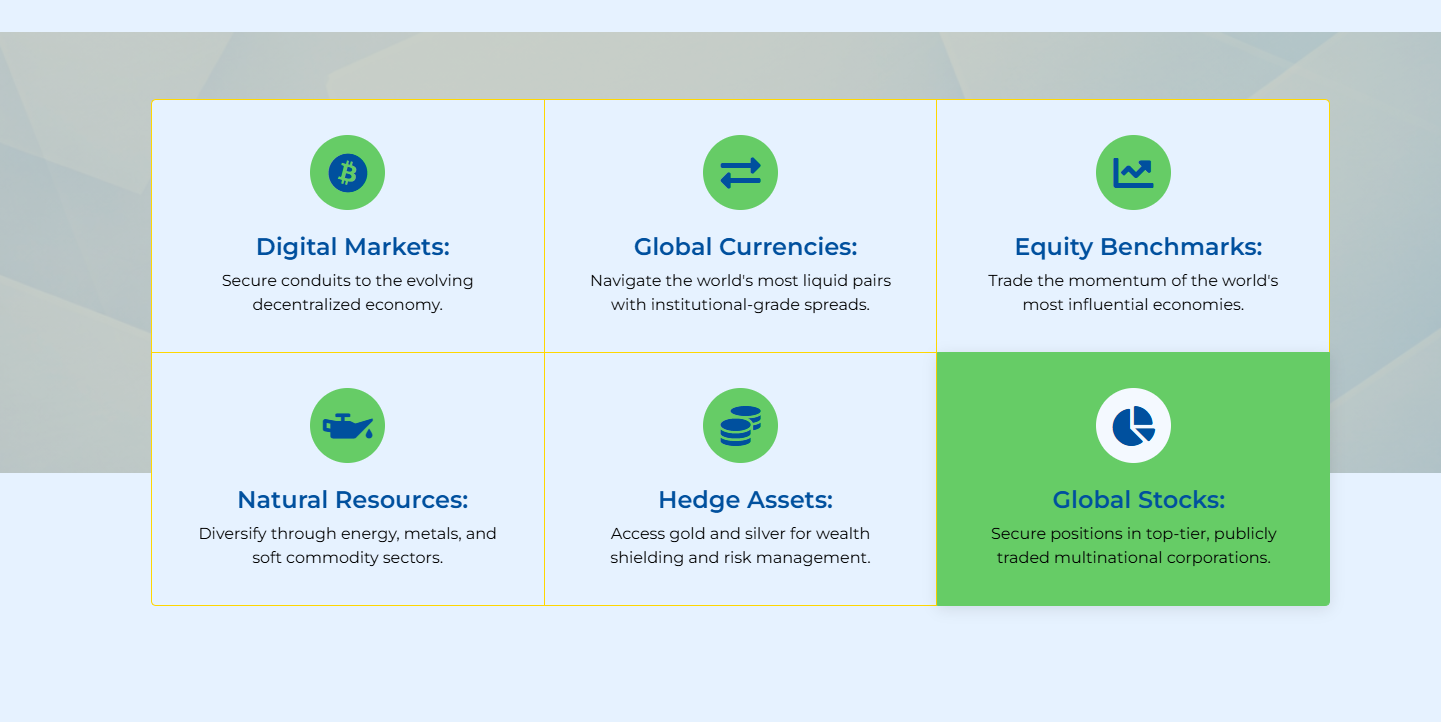
This TibiPro.com Review examines how asset access is organized within the trading environment. Market participation typically extends across forex pairs, CFDs, commodities, indices, and digital assets, depending on account structure.
Centralized access to multiple asset categories within a unified dashboard allows for diversified allocation without requiring platform transitions. Structured access to these instruments supports capital flexibility.
The presence of integrated market monitoring tools further enhances accessibility across categories, allowing traders to analyze correlations and exposure concentration within the same interface.
How Does the User Interface Balance Simplicity and Depth?
This TibiPro.com Review evaluates whether the interface leans toward minimalism or layered capability. Professional-grade systems often aim to balance ease of navigation with access to detailed analytics.
The layout appears organized around clarity, with clearly segmented panels for portfolio metrics, market charts, and trade deployment. Rather than overwhelming users with excessive customization, the system emphasizes structured consistency.
This balance supports traders who prefer stability and repeatable workflows over continuous interface modification.
How Does the Platform Compare Structurally to Other Models?
This TibiPro.com Review places the platform within a broader structural comparison to clarify its positioning relative to both simplified retail environments and more feature-saturated systems.
By examining how execution integration, infrastructure stability, security layering, and asset accessibility compare across different platform models, the analysis provides a contextual perspective rather than an isolated evaluation.
Understanding these structural distinctions helps determine whether the system aligns more closely with consolidated, discipline-oriented environments or with fragmented frameworks that prioritize customization over workflow continuity.
| Feature | TibiPro | Average Retail Platform | Feature-Heavy Experimental Platform |
| Execution Integration | Unified execution and analytics within a single workspace, reducing friction between analysis and deployment. | Often separates analysis tools from execution windows, requiring additional navigation. | Offers extensive customization but may fragment workflow across multiple modules. |
| Infrastructure Stability | Redundant hosting references and encrypted data channels are embedded into the core architecture. | Standard hosting with limited transparency regarding redundancy. | High customization potential, but performance stability can vary under load. |
| Security Model | Multi-layer safeguards and monitored activity detection are integrated within platform operations. | Basic encryption with fewer structural monitoring references. | Security tools available, but often dependent on optional settings. |
| Asset Access | Centralized multi-asset participation within a unified dashboard environment. | Typically limited to select asset categories depending on account level. | Broad asset variety but occasionally segmented across separate modules. |
This comparison highlights structural distinctions between consolidated execution environments and more fragmented or experimental systems.
How Do Platform Features Support Consistent Execution Discipline?
This TibiPro.com Review considers how interface organization and security alignment contribute to disciplined trading behavior. Consistency often depends on predictable workflows and minimized operational disruption.
Centralized dashboards, integrated analytics, and embedded security protocols collectively reduce unexpected interruptions. When platform architecture supports repeatable processes, traders are more likely to maintain structured routines.
Infrastructure stability and feature integration appear aligned with maintaining operational continuity rather than promoting rapid or impulsive execution.
Final Assessment: Are Platform Features and Security Structurally Aligned?
This TibiPro.com Review concludes that the platform’s feature set and security architecture appear organized around integration, protection, and workflow clarity rather than isolated functionality. Execution tools, encryption layers, and references to infrastructure stability collectively point toward an environment designed to support operational reliability under varying market conditions.
Such alignment suggests that system components are structured to function cohesively, reinforcing consistency in both performance and user interaction.
Instead of presenting itself as a feature-dense interface, the framework appears oriented toward consolidating analysis, execution, and capital oversight within a single operational flow. This integrated approach can help minimize fragmentation between monitoring, decision-making, and trade deployment.
For traders who value a platform where security and functionality operate within the same structural ecosystem, the architecture reflects a design philosophy centered on disciplined organization and continuity rather than scattered complexity.
TibiPro.com Review: Are the Platform Features and Security Architecture Built for Reliable Trading?
© Riproduzione riservata